Board Exam Preparation 2026: Are you the one preparing for board exams this year? Well, board exam preparation can feel challenging when you have school, tuition, and self-study every day. Many students struggle to find enough time for revision often feel unsure where to start.
The key is to prioritise consistency and quality over quantity of study hours. Even 3–4 hours of focused self-study daily can help you revise concepts, practice questions, and strengthen weak areas.
This article guides you on how to balance school, tuition, and self-study with a practical daily routine, tips, and strategies that really work.
Board Exam Preparation 2026
Students have started their board exam preparations 2026 for various educational boards like CBSE, CISCE, UP Board, Maharashtra board, etc. The date sheets have been released by various board authorities and are available in PDF on the respective website.
| Latest NEWS: Board Exam Date Sheet 2026 Announced – Check Board Wise Here |
Why Balancing School, Tuition, and Self-Study Matters
Balancing your day is essential because most students underestimate how little free time they actually have for self-study. A typical day includes:
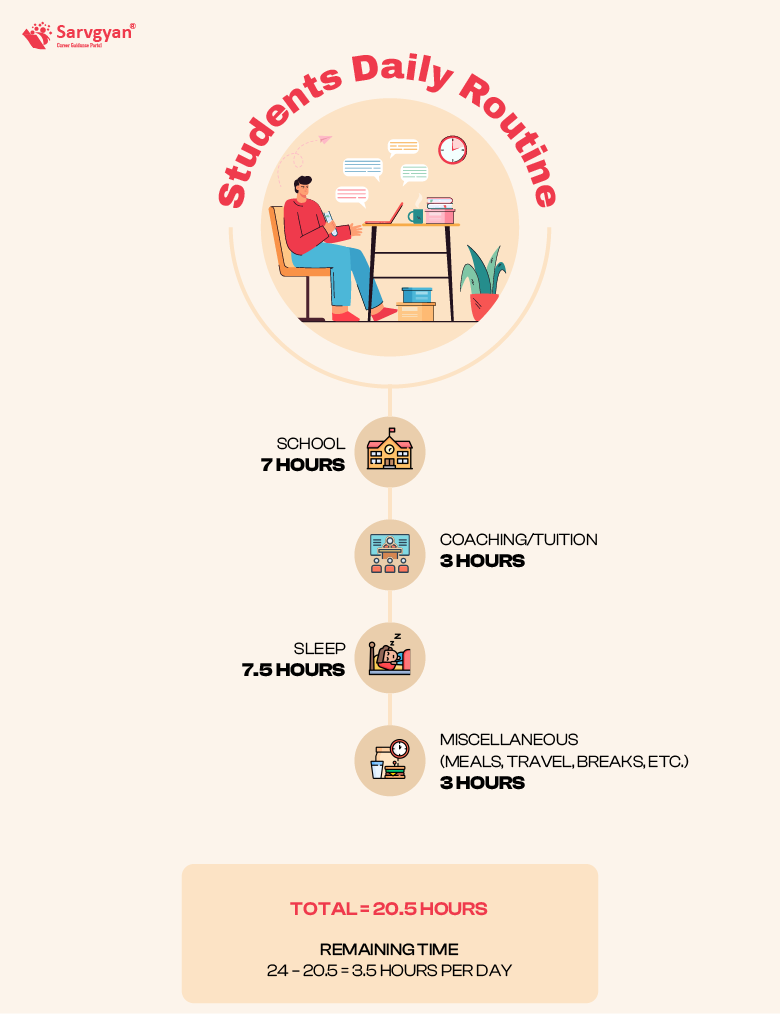
- 7 hours at school
- 2–3 hours at tuition or coaching
- 7–8 hours of sleep
- 3 hours for meals, travel, and short breaks
This leaves only 3–4 hours for self-study, which is why planning is crucial. Without a proper routine, even long hours of studying can be inefficient and stressful.
| 💡 PRO Study Tip: Integrate a structured schedule with self care for avoiding burnout and last-minute cramming. Using your free hours wisely can separate an average student from a topper. |
Typical Student Vs Topper Routine
Many students waste their free hours on distractions or unplanned study, while toppers use the same hours strategically. Here’s a comparison:
| Activity | Typical Student | Topper Students | Points to Remember |
| School | 7 hours | 7 hours | Focus during class and take notes carefully |
| Tuition/Coaching | 3 hours | 3 hours | Solve doubts and practice examples actively |
| Sleep | 7.5 hours | 7.5 hours | Helps memory, attention, and energy levels |
| Meals /Travel /Breaks | 3 hours | 2.5 hours | Take short, efficient breaks and eat on schedule |
| Self-Study | 3.5 hours | 4 hours | Focused practice of weak areas and revision |
| Total | 24 hours | 24 hours | Time management is the key difference |
Must Know ➡ The difference is not the number of hours, but how effectively you use them. Small adjustments in break times and focused self-study make a big difference.
| Are You Appearing for CBSE 10th OR 12th Board Exams This Year? | |
| Check CBSE 12th Board 2026 Preparation Guide | Check CBSE 10th Board 2026 Preparation Guide |
Daily Routine for Board Exam Preparation
A well-structured daily routine for the board exam helps you manage school, tuition, and self-study without feeling stressed.
| Time | Activity | Points |
| 5:30 – 6:30 AM | Morning self-study | Focus on formulas, diagrams, or weak topics |
| 6:30 – 7:00 AM | Breakfast & get ready | Keep it light and healthy |
| 7:00 – 2:00 PM | School | Attend classes actively, take notes for easier revision |
| 2:00 – 3:00 PM | Lunch & rest | Optional 20-min power nap to recharge |
| 3:00 – 6:00 PM | Tuition/Coaching | Solve doubts, clarify concepts, practice examples |
| 6:00 – 6:30 PM | Snack & refresh | Short walk or relaxation for mental break |
| 6:30 – 8:30 PM | Self-study | Revise school and tuition topics, focus on weak areas |
| 8:30 – 9:00 PM | Dinner | Eat well and avoid heavy phone use |
| 9:00 – 9:30 PM | Quick review | Revise formulas, notes, or important points |
| 9:30 – 10:30 PM | Extra practice / flexible | Practice papers or light revision |
| 10:30 PM – 5:30 AM | Sleep | Maintain a consistent sleep schedule for better memory |
How to Prioritize Daily Tasks for Better Productivity
When your day is packed with school, tuition, self-study, and personal activities, it’s easy to feel lost or overwhelmed. The key is to prioritise tasks based on deadlines, importance, and fixed schedules. Focusing on the right tasks first ensures that you make the most of your available time and avoid last-minute stress.
Here’s an example of a typical day’s tasks:
- Task 1: Finish your physics practical file
- Task 2: Attend math tuition
- Task 3: Revise history for next week’s test
- Task 4: Scroll social media
To organise these efficiently, you can use the following table:
| Task | Description | Priority/Plan |
| Task 1 | Finish your physics practical file | High priority: Complete first because it has a deadline |
| Task 2 | Attend math tuition | Fixed timing: Plan your day around this slot |
| Task 3 | Revise history for next week’s test | Medium priority: Spread over the week in small sessions |
| Task 4 | Scroll social media | Low priority: Limit or skip to free up self-study time |
Tip: Start with tasks that have immediate deadlines, fit in fixed commitments like tuition, and then allocate time for revision. Reduce or postpone activities that don’t contribute to your exam preparation.
By following this approach, you can balance school, tuition, and self-study efficiently and make sure your day is productive without feeling overwhelmed.
| Also Check | |
| Which is the No.1 Education Board in India? | School Education In India |
Smart Self-Study Tips for Board Exams
Effective self-study is the backbone of board exam preparation. How you study can make a bigger difference than how long you study. Here are some practical tips to make your self-study more productive:
- Revise regularly: Go over what you learned in school and tuition each day to keep concepts fresh.
- Practice with sample papers: Solving previous years’ questions helps you understand the pattern and improves speed.
- Focus on weak areas: Don’t just revise topics you’re good at; spend extra time on chapters you find difficult.
- Use active learning: Instead of just reading, write notes, solve questions, and test yourself.
- Take short breaks: Studying in focused intervals with breaks keeps your mind fresh and alert.
- Limit distractions: Keep phones, social media, and other distractions away during self-study hours.
Few focused hours of self-study daily can be more effective than long, distracted sessions. Following these tips ensures that your self-study time actually helps you improve your performance in Board Exam 2026.
Weekend Study Plan for Board Exams
Weekends are the perfect time to catch up and get ahead in your board exam preparation 2026. With school and tuition taking up weekdays, using weekends smartly can make a big difference.
- Complete pending chapters: Finish any topics you couldn’t cover during the week.
- Practice mock tests: Simulate exam conditions to improve speed and accuracy.
- Revise difficult topics: Focus on chapters or concepts you find challenging.
- Plan for the week ahead: Make a small schedule for the coming week to stay organized.
Using your weekends effectively ensures you don’t leave revision for the last minute and keeps your preparation consistent and stress-free.
Common Mistakes to Avoid During Board Exam Preparation
Even with the right study plan, certain habits can slow you down. Avoiding these mistakes helps you make the most of your time:
- Studying for long hours without breaks: Continuous study can tire your brain and reduce retention.
- Last-minute cramming: Trying to learn everything at the last moment increases stress and lowers performance.
- Ignoring weak subjects: Focusing only on topics you like or are good at leaves gaps in your preparation.
- Spending too much time on phones or social media: Small distractions add up and eat into your valuable self-study hours.
By steering clear of these habits, you can study smarter, stay organized, and stay calm during your board exams.
Success in board exams comes from planning, consistency, and smart study strategies. Stick to your daily routine, revise regularly, focus on weak areas, and avoid distractions. Even 3–4 hours of effective self-study daily, combined with school and tuition, can lead to strong results in Board Exams 2026.
Frequently Asked Questions (FAQs):
Below is our comment section where you may ask any questions or doubts regarding the Board Examination. Best assistance will be provided by our team.